
What is a proof copy? (and why you should always read one)
Workstream D — writing-tips cluster, bank item #34. Target cluster: "proof copy". Harmony link: /book-printing.
Quick answer. A proof copy is a physical printed copy of your book made before the full print run or the public release, so you can hold the finished thing in your hands and check it — the interior, the cover, the spine, the trim, the colours, the page order — while mistakes can still be fixed cheaply. Where a screen preview shows you a simulation, a proof shows you what the reader will actually receive.
Key takeaways
- A proof is a real printed book, not a file. It uses the same press, paper, binding and cover as the edition you are about to sell.
- Its job is checking, not selling. A proof is usually not for readers to buy; it is your final quality gate before release.
- It catches what a screen cannot. Margin drift, spine width, cover wrap, colour shifts, faint ink, page order and trim all only show up in physical form.
- The window is short and the stakes are high. An error fixed at proof stage costs a new file; the same error found after a full run is thousands of unsellable copies.
- "Proof" and "ARC" are not the same thing. A proof checks production; an advance reader copy is for reviewers and blurbs.
- "Proof" and "proofreading" are not the same thing. Proofreading is a language task; a proof copy is a production sample.
- Always read the proof as a reader would — front to back, not spot-checking the pages you remember worrying about.
What a proof copy is for
Five things, in the order they matter:
- Confirming the files are right. The proof is the first time your interior and cover are rendered by an actual press. If a file is wrong, the proof is where you find out.
- Checking the physical read. How does the type sit on the page? Is the margin comfortable? Does the spine hold a title legibly? Does the cover wrap straight?
- Ordering and pagination. Are the pages in the right sequence, is the title page where it belongs, does the table of contents match the pages it points to?
- Colour and finish. Ink colours on text and cover look different on paper than on a monitor; a proof shows you the real result.
- A last, calm full read. Mistakes that survive every earlier stage are usually the obvious ones you stopped seeing — and a printed copy makes them visible again.
The proof-stage checks that actually catch mistakes
- Read it as a reader. Sit down with the proof front to back, as if you had just bought it, and mark anything that jars.
- Check the low page numbers and the high page numbers. Front matter and the last few pages carry the most layout errors.
- Open to the table of contents and follow it. Every listed chapter should start on the page it claims.
- Look at the spine and the cover edges. Is the title centred on the spine? Is any text too close to the trim?
- Check the barcode. It should be built from the correct ISBN, sized and placed where the printer expects it.
- Compare colours against your design. Cover colour and any images should match your intent, not the monitor's approximation.
- Check the paper and binding. Is the stock right, the trim square, the pages secure?
Proof copy vs ARC vs proofreading — do not mix these up
| Term | What it is | Who it is for | When |
|---|---|---|---|
| Proof copy | A printed sample of the finished book, made before release | You (and your editor), for checking | Before the full run / release |
| ARC (advance reader copy) | A pre-release copy sent out for reviews and blurbs | Reviewers, early readers | Before launch, for marketing |
| Proofreading | A language task: fixing typos, grammar, punctuation in the text | The manuscript | Late editing, before layout |
A proof copy is a production artefact. An ARC is a marketing artefact. Proofreading is an editing task. Related, but not interchangeable.
The mistakes that actually happen
- Releasing without holding a proof. The most expensive shortcut there is. Every error a proof would have caught is now printed in every copy.
- Spot-checking instead of reading. Flipping through the pages you already worried about misses the page you never looked at twice.
- Only checking the cover. The interior — margins, page order, headers, scene breaks — carries the errors readers find first.
- Approving the proof then changing the file. If the file changes after the proof, the proof no longer describes the book; you need a fresh proof.
- Confusing a proof with a release. A proof is a checkpoint, not a publication; do not send a proof copy to a reader or a shop as if it were final stock.
- Assuming the printer's preview equals the proof. A digital preview is a convenience; the printed proof is the authority.
- Forgetting the physical details. Paper weight, trim in millimetres and binding style all affect how the finished book feels and reads.
A short proof-check routine before release
- Order the proof once the interior and cover files are final and the ISBN is set.
- Read it front to back as a reader, marking anything that jars.
- Walk the front matter and back matter — title page, contents, dedication, index, colophon.
- Check the spine, cover wrap, trim and barcode against the printer's specification.
- Compare colour and paper with your design intent.
- Sign off, or fix and re-proof. If anything changes, the proof is void and a new one is needed.
Reading proofs, checking print-ready files and getting the physical details right is the unglamorous part of publishing — and exactly the part that decides whether the finished book looks professional. If you would rather not carry that yourself, it is part of what we look after: our book printing service and our self-publishing packages cover printing, ISBN assignment, the barcode, print and eBook setup and worldwide distribution.
Related guides
Keep going: how to write a book, the types of book editing, book editing services and proofreading services. For a dictionary definition, see proof (Cambridge Dictionary).
Disclosure: Harmony Publishing is a self-publishing company and links to its own services where they match a step. The language guidance here is practical, not a rule for every style guide.
Keep reading
Worse vs Worst: What's the Difference? (With Examples, 2026)
More →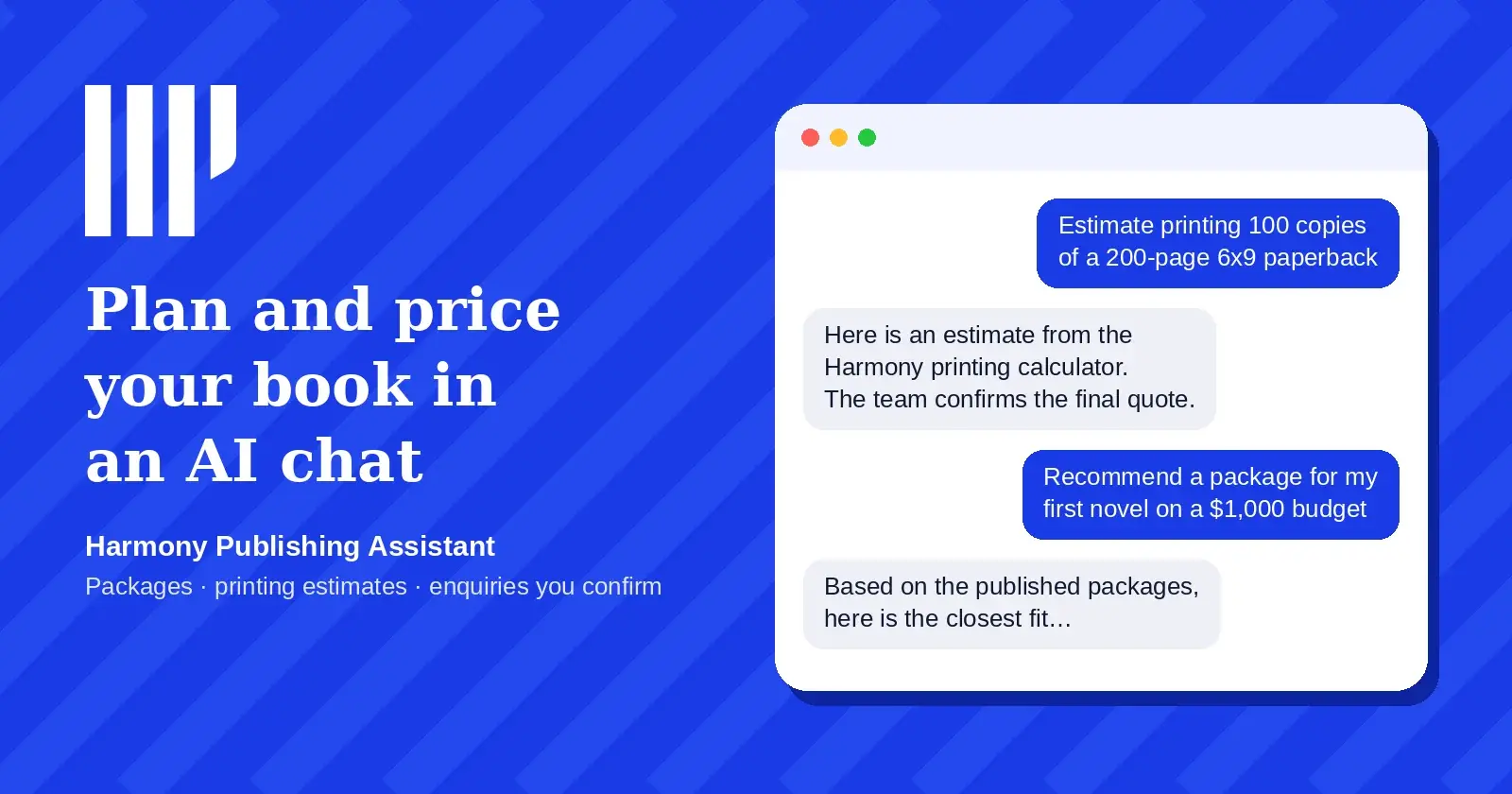
Plan and price your book inside ChatGPT with the Harmony Publishing Assistant
More →What is a first printing? (and how to tell whether your copy is one)
More →New to Harmony Publishing? What is Harmony Publishing?